
Building a Family and Community | Sylvia Rivera (1751-2002): Not Just Cistory
cw: this blog discusses addiction to drugs and alcohol, police brutality, intercommunity racism and transphobia, suicide attempts, and the suicide of a parent
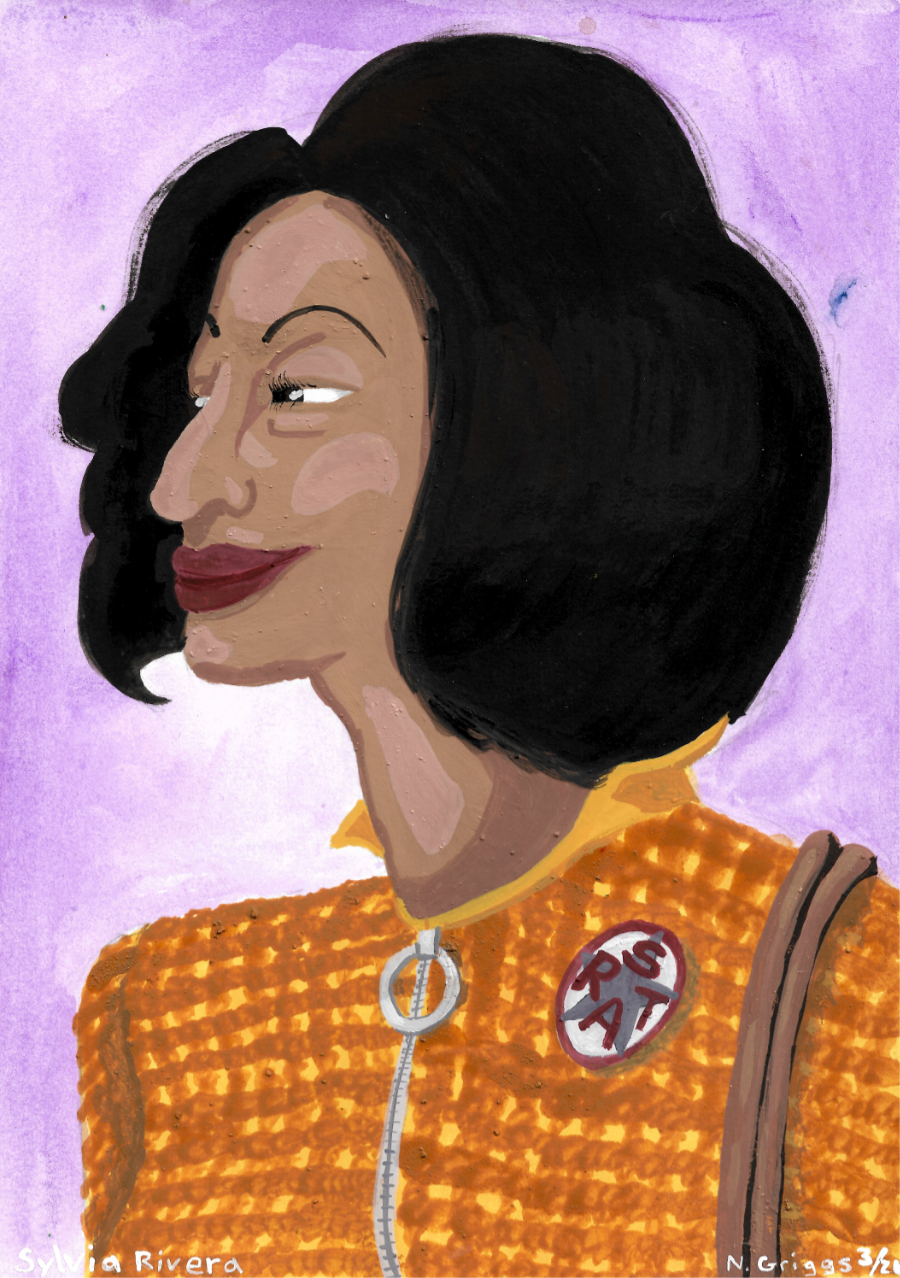
The idea of separating the the queer LGBT+ community into its disparate letters and parts is not a new one. One might argue that the splitting of the L, G, B, T, and others is an attempt by bigots to divide and conquer, to that I say yes, and, division is often coming from within the community. As frustrating as it is to see ableism, racism, fatphobia, transphobia, and any and all forms of bigotry can exist within the LGBT+ community. As we discuss Sylvia Rivera's life, we will be focusing on transphobia and racism. She spent nearly all of her time as an activist fighting for transgender individuals to be considered a part of the 'gay rights' movement. She fiercely defended her transgender 'siblings' and 'children', especially those of color.
Expression and Exploitation
cw: this next section includes description of the suicide of a parent, colorism, trans and homophobia, and verbal, physical, and sexual abuse.
Sylvia Rivera was born on the July second 1951 in the Bronx, to her Puerto Rican mother and a Venezuelan father (Klebine, n.d.). Unfortunately, "Rivera had an incredibly difficult childhood. Her father was absent and her mother died by suicide when Rivera was 3 years old" (Rothberg, 2021). She was raised by her grandmother, and began expressing herself with feminine clothes and makeup from a very early age.
Rivera’s home life did not support her or her self exploration. Her "grandmother took care of her for a period of time, but voiced her disapproval not only of Rivera’s mixed background that made her skin darker than she preferred... but also of her behavior, which was deemed too effeminate for a boy... After Rivera’s half-sister, Sonia, was taken away by her birth father, her grandmother resented her even more, and she often received beatings from her" (Klebine, n.d.). Rivera did not receive the safety and support that she should have in her own home, both as result of colorism and transphobia.
School was not any better, she suffered through "continued mockery and altercations with other students; her wearing of make-up, which started in fourth grade, contributed to her ultimate abandonment of formal education when she was mocked in the sixth grade and called “faggot” by a fellow classmate" (Klebine, n.d.). Rivera was a strong child, and weathered these assaults both at home and in school for as long as she could.
But finally, "[a]fter years of switching between living at her grandmothers’ house... a Catholic boarding school, and... with various family friends for long periods of time... she left home at the age of 11... [and made a life and living on] Forty-second Street, an area that was home to a community of drag queens, sex workers, and those who were hustling inside and outside of the gay community of New York in the early 1960s" (Klebine, n.d.). Many transgender youth find their home lives to be untenable, and opt to live on the streets and support themselves the only way that is open to them; sex work.
Thankfully, Sylvia finally found a supportive community and a family. "Rivera had been engaging in sex work before she left home by hustling with her uncle to earn extra money.... [Now she was] Informally “adopted” by a group of young drag queens and adopt[ed] the name “Sylvia” for herself, Rivera learned how to survive on the streets with their guidance, often changing sleeping location every night depending on where her friends could secure shelter..." (Klebine, n.d.).This family and the experience of living and working on the streets would shape her activism and the rest of her life.
It’s the Revolution!
cw: this next section includes description of police brutality and homo & transphobia.
Perhaps what Sylvia Rivera is best known for in the wider consciousness of the Queer and Transgender community is her participation in Stonewall. There has been a shift in the terminology used to refer to the events at the Stonewall. "While the events of Stonewall are often referred to as "riots," Stonewall veterans have explicitly stated that they prefer the term Stonewall uprising or rebellion. The reference to these events as riots was initially used by police to justify their use of force" (Library of Congress, 2019). I will keep the terms used by those quoted, but I myself will refer to the events as a rebellion in reaction to police raids in an effort to center those who where targeted by the police, rather than the narrative pushed by law enforcement.
On "June 28, 1969... a series of events between police and LGBTQ+ protesters [began] which stretched over six days" (Library of Congress, 2019). This nearly week-long resistance to the raid is often considered the start of the 'Gay Rights' movement.
In her book 'Transgender History: The Roots of Today's Revolution'*, Susan Stryker explains that "[t]he 'Stonewall Riots' have been mythologized as the origin of the gay liberation movement, and there is a great deal of truth in that characterization, but... gay, transgender, and gender nonconforming people had been engaging in militant protest and collective actions against social oppression for at least a decade by that time.... as a result of many years of social upheaval and political agitation, large numbers who were socially marginalized because of their sexual orientation or gender identity, especially younger people who were "part of the Baby Boomer generation, were drawn to the idea of 'gay revolution' and were primed for any event that would set such a movement off" (2008/2017, p. 106). Whether Stonewall was more of a culmination, or a beginning (or both), Sylvia Rivera was there.
The Stonewall itself wasn't explicitly a gay bar, rather it was a mafia-owned establishment whose owners didn't care what the patrons got up. This meant it was a sort of safe haven for Transgender, Queer Folks, & Drag Queens (Library of Congress, 2019). In the sixties "[p]olice raids were relatively frequent (usually when the bar was slow to make its payoffs to corrupt cops) and relatively routine and uneventful. Once the bribes were sorted out, the bar would reopen, often on the same night" (Stryker, 2008/2017, p. 108).
The events leading up to the raid were nothing out of the ordinary; "[t]he Stonewall was raided on average once a month leading up to the raid" (Library of Congress, 2019). "But in the muggy, early morning hours of Saturday, June 28, 1969, events departed from the familiar script when the squad cars pulled up outside the Stonewall Inn" (Stryker, 2008/2017, p. 108).
In her 2001 speech at the Lesbian and Gay Community Services Center for the June First Friday Meeting of the Latino Gay Men of New York Rivera described the events of the raids:
This is the second time in one week that the bar was raided. ...the police from the 6th Precinct would come in to each gay bar and collect their payoff.... If you did not have three pieces of male attire on you, you were going to jail. Just like a butch dyke would have to have three pieces of female clothing, or he was going to jail.... We are led out of the bar. The routine was that the cops get their payoff, they confiscate the liquor... A padlock would go on the door. [We would] ...disappear to a coffee shop or any place in the neighborhood for fifteen minutes. You come back, the Mafia was there cutting the padlock off, bringing in more liquor, and back to business as usual.
...instead of dispersing, we went across the street.... as the cops are inside the bar, the confrontation started outside by throwing change at the police.... "Here's your payoff, you pigs! You f---ing pigs! Get out of our faces." This was started by the street queens of that era, which I was part of, Marsha P. Johnson, and many others that are not here...
...The confrontation got so hot, that Inspector (Seymour) Pine, who headed this raid, him and his men had to barricade themselves in our bar... The people that they had arrested, they had to take into the bar with them, because there was no police backup for them. ...to this day, we don't know who cut the phone lines! So they could not get the call [for backup] to the 6th precinct....
...[A] Village Voice reporter [that was trapped inside the bar]... proceeded to tell his story, in the paper, that he was handed a gun. The cops were actually so afraid of us that night that if we had busted through that bar's door, they were gonna shoot.... Someone yanked a parking meter out the floor... It was loose, you know, I don't know how it got loose. But that was being rammed into the door....
...Once word of mouth got around that the Stonewall had gotten raided, and that there's a confrontation going on, people came from the clubs.... it was not just the gay community and the street queens that really escalated this riot; it was also the help of the many radical straight men and women that lived in the Village at that time, that knew the struggle of the gay community and the trans community.
...It was actually very exciting cuz I remember howling all through the streets, "The revolution is here!"... Cars are being turned over, windows are being broken, fires are being set all over the place. Blood was shed. When the cops did finally get there, the reinforcements, forty five minutes later, you had the chorus line of street queens kicking up their heels, singing their famous little anthem that up to today still lives on, "We are the Stonewall girls/ we wear our hair in curls/ we wear our dungarees/ above our nelly knees/ we show our pubic hairs," and so on and so forth.
...what I found very impressive that evening, was that the more that they beat us, the more we went back for. We were determined that evening that we were going to be a liberated, free community... (Rivera, n.d.).
Rivera is one of the women credited with throwing the first Molotov cocktail or the first brick, and there is no widespread consensus on the internet (is there ever?) of what actually happened (O’Neill, 2019). However, Sylvia herself, has said "'I have been given the credit for throwing the first Molotov cocktail by many historians but I always like to correct it; I threw the second one, I did not throw the first one!... And I didn't even know what a Molotov cocktail was; I'm holding this thing that's lit and I'm like 'What the hell am I supposed to do with this?' 'Throw it before it blows!' 'OK!'..." (Rivera, n.d.).
At just seventeen, Rivera must have felt like the world was shifting, leading the way to a better and brighter future. She has been quoted several times as having said that day in June “'I’m not missing a minute of this — it’s the revolution!'” (Dunlap, 2026). In some ways it truly was the start of something new, and in others it was just another brick in the road to liberation.
Not White or Cis Enough
cw: this next section includes mentions of homo & transphobia.
The energy generated by the events during the Stonewall raid turned into action quickly. "Within a month of the Stonewall Riots, gay activists inspired by the events in Greenwich Village formed the Gay Liberation Front (GLF), which modeled itself on radical Third World liberation and anti-imperialist movements. The GLF spread quickly through activist networks in the student and antiwar movement, primarily among white young people of middle-class origin. Almost as quickly as it formed, however, divisions appeared within the GLF, primarily taking aim at the movement's domination by white men and its perceived marginalization of women, working-class people, people of color, and trans people" (Stryker, 2008/2017, pp. 109-110). This was when Sylvia began to feel friction from the rest of the Gay Rights movement.
Ultimately, Sylvia was ostracized from the GLF and other organizations like "the less radical... Gay Activists Alliance (GAA) which aimed to reform laws rather than foment revolution" (Stryker, 2008/2017, p. 110). Despite her passion for what these organizations could do, "her identities as a street worker, drag queen, poor, and a Latina were troubling to the largely white, middle-class activist groups... “Sylvia was from the wrong ethnic group, from the wrong side of the tracks, wearing the wrong clothes – managing single-handedly and simultaneously to embody several frightening, overlapping categories of Otherness” (Klebine, n.d.). The institutions of white supremacy and capitalism had made themselves quite at home in these organizations, and that meant that Sylvia and others like her were not welcome.
Rivera's second most famous act of protest was her 'Y'all Better Quiet Down' speech. "In 1973... organizers tried to prevent Sylvia Rivera...from addressing the annual commemoration of Christopher Street Liberation Day, Rivera took the stage anyway and issued a devastating critique of the cisgender whiteness of the gay and feminist movements... (Stryker, 2008/2017, p. 128). I have included some of the speech here, but there are many places online where you can find it in its entirety.
Y’all better quiet down. I’ve been trying to get up here all day, for your gay brothers and your gay sisters in jail! They’re writing me every motherfuckin’ week and ask for your help, and you all don’t do a god damn thing for them.... The women have tried to fight for their sex changes, or to become women of the women’s liberation. And they write STAR, not the women’s group. They do not write women. They do not write men. They write STAR, because we’re trying to do something for them.... But do you do anything for them? No! You all tell me, go and hide my tail between my legs. I will no longer put up with this shit. I have been beaten. I have had my nose broken. I have been thrown in jail. I have lost my job. I have lost my apartment For gay liberation, and you all treat me this way? What the fuck’s wrong with you all?... I believe in the gay power. I believe in us getting our rights or else I would not be out there fighting for our rights. That’s all I wanted to say to your people.... (Nothing, n.d., p. 30)
This speech illustrates exactly what Sylvia saw as wrong with the Gay Rights movement, and the injustice and bigotry that were interwoven into the groups that made it up.
STAR and Marsha
Ever the fighter, and determined to improve the lives of her Transgender Siblings, Sylvia decided to get to work helping those the GLF and GAA would not. Together, Rivera and Marsha P. Johnson (who Rivera met in 1963) (Rothberg, 2021) founded "STAR--Street Transvestite Action Revolutionaries.... to help street kids stay out of jail, or get out of jail, and to find food, clothing, and a place to live. [it was] ...an overtly politicized version of the 'house' culture that already characterized [B]lack and Latino queer kinship networks, where dozens of trans youth could count on a free and safe place to sleep.... Their goal was to educate and protect the younger people who were coming into the kind of life they themselves led..." Stryker, 2008/2017, p. 110). Rivera wanted other trans kids of color to have a safer and happier time of growing up on the streets than she had had.
Both women played an active role in STAR House "Rivera explained in 1998, 'Marsha and I decided it was time to help each other and help our other kids. We fed people and clothed people. We kept the building going. We went out and hustled the streets. We paid the rent.' Though Rivera was only nineteen herself, she became like a mother to many of the residents at STAR House, and she and Johnson helped to form a home and family for those who needed it most" (MonkEL, 2015). They both created a community from the ground up, and despite the fact that STAR House lasted for only two or three years... its legacy lives on even now" (Stryker, 2008/2017, pp. 110-111).
Despite the lack of acceptance from other Gay Rights organizations, whether explicit or not, there were some groups that supported STAR. "Some STAR members, particularly Rivera, were also active in the Young Lords, a revolutionary Puerto Rican youth organization. One of the first times the STAR banner was flown in public was at a mass demonstration against police repression organized by the Young Lords in East Harlem in 1970, in which STAR participated as a group" (Stryker, 2008/2017, pp. 110-111). It is evident that there is more support amongst different groups of people, than the overculture would like us to realize.
Time Away from New York City (and Back Again)
cw: this next section includes mentions of substance abuse as well as multiple suicide attempts.
The end of STAR House compounded with the lack of acceptance and support from the Gay Rights movement deeply affected Sylvia Rivera, and she struggled deeply for the next chapter of her life. "Rivera frequently experienced homelessness and had problems with substance abuse. At one point, Rivera attempted suicide. Her friend Johnson brought her to the hospital and helped her get healthy again. After this experience, Rivera left New York City and activism behind for a bit" (Rothberg, 2021). A true family, her friends supported and held her.
When she left New York City, she moved to Westchester, and worked in food service for a while. She and her then-lover Frank bought a house, which they lived in until they lost it to a crack addiction. That was how she became unhoused once again and when she moved to a pier in the West Village. She remained on the pier for a year-and-a-half, and resumed her Mother role in the community; giving advice and comforting those who came to her (Dunlap, 2026).
The ongoing ostracization from the mainstream Gay Rights movement along with all the other struggles she personally faced, as well as all of the bigotry from both within and without the LGBT+ community meant that "In 1995, [Rivera] attempted suicide [once again] by walking into the Hudson River; the same river where... Marsha P. Johnson, was found dead in 1992" (Klebine, n.d.). Thankfully, she did not succeed, and was able to find purpose and continue fighting.
End of Life and Legacy
Eventually the wider Gay community made overtures at repairing the relationship they had with Sylvia Rivera. "In 1994, Ms. Rivera was given a place of honor in the march marking the 25th anniversary of Stonewall. [She recalled the event, saying] 'The movement had put me on the shelf, but they took me down and dusted me off... Still, it was beautiful. I walked down 58th Street and the young ones were calling from the sidewalk, ‘Sylvia, Sylvia, thank you, we know what you did.’ After that I went back on the shelf. It would be wonderful if the movement took care of its own. But don’t worry about Sylvia.'" (Dunlap, 2026). It is obvious in her tone and words that she was still, rightfully, unhappy with how she and her trans siblings and children had been treated by the people that should have been standing by them.
Despite everything, Sylvia still wanted to make a difference. In 1997 she founded another space where Transgender people could live safely; Transy House (Dunlap, 2026). It was through Transie House (the name seems to have been spelled multiple ways) that Sylvia met the woman she would spend the rest of her life with. When Sylvia was moving into Transie house, Julia Murray was just recovering from a mental crisis. During this time the two women became very close friends. They even slept together every night so that Julia didn't have to be alone. They eventually became lovers and even considered getting married (Isay, 1999).
In Julia, Sylvia found someone who understood who she was, as well as what she had gone through as a Transgender woman. She said "I feel that both of us being transgendered, we understand what the other has gone through. We have always been with men, but the men that we have met in our lives haven't been able to give us the sensitivity that we share between ourselves. She's a person that has made my life different. She's helped me -- I'm not doing drugs, and I'm not drinking so much. It's just that we're happy together" (Isay, 1999). After so much time helping others and caring for them, Sylvia had found someone who could and would do the same for her. Undoubtedly the last years of her life we better for having Julia in them.
Despite her desire to see a better world for transgender folks, especially those of color, and those who had done sex work, she did not live to see much change. Sylvia Rivera passed away at the heart-breakingly young age of 50 on February 19th, 2002 due to liver cancer (Klebine, n.d.). Of course "Julia Murray, was with her at the time of her death" (Rothberg, 2021).
Sylvia believed a better world was possible, and she believed that she would be there to see it. She said "Before I die, I will see our community given the respect we deserve. I’ll be damned if I’m going to my grave without having the respect this community deserves. I want to go to wherever I go with that in my soul and peacefully say I’ve finally overcome" (Nothing, n.d., p. 55).
Even though she did not live to see this change, Rivera's legacy continues to this day. "The Sylvia Rivera Law Project... guarantees 'all people are free to self-determine their gender identity and expression, regardless of income or race, and without facing harassment, discrimination, or violence.'" (MonkEL, 2015). There are streets named after her, statues of her and Marsha P. Johnson, and her portrait hangs in the National Portrait gallery (MonkEL, 2015). Despite how well-deserved these honors are, I can't help but feel that Rivera might find them a little less than pointless, when Transgender folks, especially Trans women of color, are still so horribly treated.
However, it does appear that the women's movement has started to understand that these women, once so entirely excluded from their own liberatory movements, have much wisdom to give, and belong at the center of the movement. "One of the first large-scale public protests of the Trump administration's priorities was the January 21, 2017, Women's March on Washington, held the day after Trump's inauguration.... The march's official 'Guiding Vision and Definition of Principles' statement named trans pioneers Sylvia Rivera, Marsha P. Johnson, and Miss Major Griffin-Gracy among 'the legions of revolutionary leaders who paved the way for us to march.'..." (Stryker, 2008/2017, p. 233).
Even if Sylvia is no longer here to continue her work, there is much we can to do to support and further her vision. If you are a white (like me) we must make a conscious effort to ensure that BIPOC members of the Queer and Trans communities are welcome in our spaces, not as guests or tokens, but as members of our 'family' and their voices and experiences must be centered, listened to, and believed. We cannot simply 'allow' them to be involved. This is their movement just as much as ours.
We also cannot continue to sperate movements. Intersectionality is key. Transgender people can and do exist under other marginalized identities, and it is foolish to pretend that these identities do not inform each other. If we work together we can achieve things that we never could have dreamed of.
NOTE! Some links (those with an * next to the name) are affiliate links. I will receive a small commission if you use these links to purchase something. It will not change the price of the product for you.
References
Dunlap, D. W. (2026, March 6). From 2002: Sylvia Rivera, Figure in Birth of the Gay Liberation Movement, Dies at 50. The New York Times. https://www.nytimes.com/2026/03/06/nyregion/sylvia-rivera-dead.html
Isay, D. (1999, June 27). Lives; “I Never Thought I Was Going to Be a Part of Gay History.” Nytimes.com; The New York Times. https://www.nytimes.com/1999/06/27/magazine/lives-i-never-thought-i-was-going-to-be-a-part-of-gay-history.html
Klebine, A. (n.d.). “Hell Hath No Fury like a Drag Queen Scorned”: Sylvia Rivera’s Activism, Resistance, and Resilience · Challenging Gender Boundaries: A Trans Biography Project by Students of Dr. Catherine Jacquet · OutHistory: It’s About Time. Outhistory.org. Retrieved March 26, 2026, from https://outhistory.org/exhibits/show/tgi-bios/sylvia-rivera. Challenging Gender Boundaries: A Trans Biography Project by Students of Catherine Jacquet.
Library of Congress. (2019). Research Guides: LGBTQ+ Studies: A Resource Guide: Stonewall Era and Uprising. Guides.loc.gov; Library of Congress. https://guides.loc.gov/lgbtq-studies/stonewall-era
MonkEL. (2015, October 26). Sylvia Rivera: Activist and Trailblazer. Npg.si.edu. https://npg.si.edu/blog/welcome-collection-sylvia-rivera
Nothing, E. (2015). STREET TRANSVESTITE ACTION REVOLUTIONARIES: SURVIVAL, REVOLT, AND QUEER ANTAGONIST STRUGGLE. [zine].
O’Neill, S. (2019, May 31). Who Threw the First Brick at Stonewall? Let’s Argue About It. The New York Times. https://www.nytimes.com/2019/05/31/us/first-brick-at-stonewall-lgbtq.html
Rivera, S. (n.d.). Our armies are rising and we are getting stronger. [Transcript]. “First Friday of the Month” meeting, June 2001. Retrieved March 27, 2026, from https://www.historyisaweapon.com/defcon1/riverarisingandstronger.html
Rothberg, E. (2021, March). Sylvia Rivera. National Women’s History Museum. https://www.womenshistory.org/education-resources/biographies/sylvia-rivera
Stryker, S. (2017). Transgender History (2nd ed.). Seal Press. (Original work published 2008)

Community Care is Queer | Carmen Rupe (1936-2011): Not Just Cistory
Content Warning: this post includes detailed descriptions of police violence against a trans woman of color, and the mention of the suicide of a parent.
Raised on Family and Tradition
Content Warning: this next part mentions the suicide of a parent.
Carmen Rupe, one of the most famous drag queens, political activists, and Mother to many of the queer and trans folks of Aotearoa (also known as New Zealand), was born on "10 October 1936 at Waimiha, between Taumarunui and Te Kūiti, the child of Elsie Tekahukete Wilson (Ngāti Hauā, Ngāti Heke-a-Wai) and her husband, John Edward Rupe (Ngāti Maniapoto)" (Townsend, 2020). She was an incredible trailblazer, was known as a beloved member of the queer and trans community in Wellington during her lifetime.
Rupe's childhood was largely characterized by family and farm life. She lived amongst her extended family, which included her "koro (grandfather) [who] was a respected tohunga (priest), [and] their kuia (grandmother)... was an expert weaver of korowai (cloaks)..." as well as her "three brothers and three sisters" (Townsend, 2020). Farm life in Waimiha was guided by the Māori maramataka (calendar) and there was no electricity, refrigeration or indoor toilet (Townsend, 2020). Carmen Rupe was surrounded by loved ones and Māori culture from the very beginning of her life.
In 1941, when Carmen was five, her father committed suicide (Townsend, 2020). In no family, is a tragedy like this painless, but it must have been incredibly hard for young Rupe and her family, given how close they all were, and how family was valued. Elise did eventually remarry, to "Inuhaere Rupe (Te Rupe), John’s brother. The couple had a further six children before Te Rupe’s death in 1947". This meant that Carmen had 12 siblings. Despite the large size of her family, Carmen and her mother were able to maintain a close relationship, and she seems to have accepted Carmen's gender (expression) and, later, sexuality (Darling, 2020).
Rupe, was aware "from a young age that she did not fit into the gender that was assigned to her at birth by the colonizing society of her country, and like many young transgender people, she expressed herself through play, dressing up in her grandmother’s clothes often. When she was fifteen, she even performed Hula at a local celebration wearing a dress" (Darling, 2020).
Familial support has not been uncommon for the subjects of the Not Just Cistory series so far, and, in Rupe's case, Māori culture and tradition support multiple genders beyond cisgender men and women. "Those who were born with the wairua (spirit) of a gender different to the one they were assigned at birth may call themselves ‘irawhiti’ (with a gender that changes or is associated with change), ‘whakawāhine’ (creating or becoming a woman), ‘tangata ira tāne’(a person with the spirit or gender of a man), or one of a number of other terms" (Schmidt, 2011). These beliefs have endured through to the present day, despite the attempts at assimilation by European colonizers.
Army Life and the Beginning of Being Carmen
At the young age of fifteen, Carmen left home, and struck out on her own. She worked in a sawmill, then the Taumarunui Post Office, and later worked in the Mosgiel Woollen Mills (Townsend, 2020). During this time she has her first romantic relationship with a man, and it confirmed what she had always known, that she was attracted to men (Townsend).
In the 1953, at seventeen, Rupe moved to Auckland where she was soon was "enlisted into compulsory military service, and it was there that she began to participate in drag performances, something that the other soldiers were not only entertained by but often encouraged" (Darling, 2020). She was able to express herself in a way that was socially acceptable, by participating in these 'morale boosting' events.
After she was discharged she "started work as an orderly at Cornwall Hospital in Auckland" (Townsend, 2020). Up until this point, Carmen had gone by her birth name and dressed traditionally masculine, and had generally lived as a man. However, during this time she began to present more femininely, and would go out in public dressed as a woman. She also began her career as a sex worker during this time, sometimes travelling between Australia and New Zealand with her clients (Townsend, 2020).
Rupe also chose the name Carmen for herself around this time. When she was asked for her name by a client she replied 'Carmen', inspired by the main character of the 1945 movie 'The Loves of Carmen' (Townsend, 2020). She was finding a way to live her life as herself, both in the metaphorical sense, but also in the practical sense.
Life in Sydney (the first time)
Content Warning: this next part includes detailed descriptions of police violence against a trans woman of color.
In 1959 Carmen Rupe moved to Australia after her mother's death (Darling, 2020). From her very first night in Sydney, she would go to places like Hyde Park, Blue Meringue Street, Kings Cross, or The Wall where she could pick up or be picked up by other men, this being before she began to live and work openly as a woman (CarmenRupe MemorialTrust, 2013). This was, of course, not without risk, but finding such a vibrant queer community immediately upon arrival to a new country, must have felt like a lifeline and a miracle to Rupe.
When she started working as a female transgender prostitute and drag queen (to use the terms she used for herself in interviews) the danger was increased. While the police disliked the male sex workers (and Sex work in general was illegal in Australia in general, at the time (Bailey, 2025)) they were incredibly brutal on transgender sex workers and drag queens in particular.
In an interview shared by the Carmen Rupe Memorial Trust on YouTube Carmen describes in an straightforward manner what police did when you were caught working as a female sex worker, were you transgender. The police would:
beat us up there outside outside in the street. They took us down to Darlinghurst police station and give us another hiding and beat us up and then they also ripped our wigs... off our heads and they also ripped all our prostitute female attire... and if we had women's underpants were in more trouble. You had to have men's underwear if if you're going to do a proper show... [T]hey put um telephone books down our chest so they can punch us. [T]hey used to also hose us in the in the Darlinghurst police station, give us a good beating up, good hiding, then they threw us in the straight cells for court the next morning... [A] lot of the guys who got picked up...were thrown in straight cells beaten up badly by the straight guys because they hated gay men drag queens and male prostitutes and drag prostitutes... [Y]ou don't mind getting picked up overnight but the worst part if you got picked up on a Friday night you didn't go to court until Monday, if you're in drag... you had this long black beard and so anyhow everyone used to laugh and... it didn't look very nice with a uh five o'clock shadow going at ten o'clock into court and then trying to get home partly dressed in drag... (CarmenRupe MemorialTrust, 2013).
It seems that no matter where you look throughout modern history, police are beating and humiliating transgender folks, particularly those who are women, sex workers, people of color, or some combination of the three.
Despite the danger she worked as the first Māori drag queen, performing in venues such as Les Girls in Kings Cross, and The Purple Onion, the first openly gay bar in the area (Transgender Icon Carmen Rupe Dies in NSW, 2011). This was the start of her lifelong role as an admired drag queen and community leader.
Rupe was arrested multiple times throughout her life, once being sent to Long Bay Prison, which was an incredibly dangerous place for anyone who wasn't a straight cisgender man. She explained that she was there for two weeks while the authorities checked her documents, since she was a New Zealander, rather than an Australian (CarmenRupe MemorialTrust, 2013).
The police would also raid the houses of known transgender and gay sex workers, looking for anything 'abnormal', so, once she was in a better financial situation, Carmen rented out a 'decoy' flat that she could tell the police was her residence, and avoid their invasive searching (CarmenRupe MemorialTrust, 2013).
In the same interview where she describes the despicable treatment by authorities, she explained that anyone who was visibly trans or queer would not be able to get any 'straight' work because the attitudes of the over culture mirrored that of the police, which is why she, and so many others turned to sex work, to have enough money to live (CarmenRupe MemorialTrust, 2013). It's not that trans or queer people are more likely to want to be a sex worker or are more likely to enjoy sex work (though some do, and that is fine), but more often it's that they cannot find any other 'straight' work, as Carmen put it.
Return, Rest, and Recuperation
Eventually, Carmen did move back to New Zealand. It wasn't necessarily by choice, however. She went back to Wellington to avoid the escalating police brutality, explaining that "the police was giving us a hiding every week and I was just getting sick and sore and wounded" (CarmenRupe MemorialTrust, 2013). Thankfully, "New Zealand wasn't so bad, because we were New Zealanders and we were safe at home" (CarmenRupe MemorialTrust, 2013). This was a time of rest and recovery for Carmen, after such a long stretch of being persecuted by the police, as well as a time of growth and community building.
After a six-month stretch in prison spanning 1962 and 1963 (she was charged with 'permitting a premises to be used as a brothel' she returned to Auckland and used the money she received in an inheritance to open a boarding house and live, finally, full-time as a woman (Townsend, 2020). Despite the legal strides being made around the world, the fact that money makes living our truth often easier in many ways, is still the case.
Despite her new business venture, she continued to put the skills she had honed in Sydney to use, performing as "an exotic dancer at Strip-A-Rama... and at private parties... At the end of the performance she removed her wig to reveal ‘Trevor’ beneath the costume – a dramatic act intended to shock" (Townsend, 2020).
In 1966 Carmen's life as herself was given another legal support; after being arrested for dressing as a woman "Justice McCarthy ruled that it was not illegal for men to dress in women’s clothing and dismissed the case. It was a win for all trans women, and Carmen never wore male clothing again" (Townsend, 2020). This was, in some ways the beginning of Carmen's legal advocacy for the LGBT+ people of Aotearoa.
Carmen the Entrepreneur
Now that Carmen could legally (and with a bit more safety) live openly as a woman, she continued her transition. "She legally changed her name to Carmen Tione Rupe on 2 September 1968.... [She continued taking the] female hormones [she began] in the 1950s, and in the 1970s she had breast augmentation surgery along with electrolysis" (Townsend, 2020). The tides were beginning to shift for Carmen, and for other Transgender people in Aotearoa.
In 1967 she began the venture that would ultimately gain her international recognition: Carmen's International Coffee House. Beyond being just a cafe, it was a safer space for trans and queer folks to meet and connect, which included, of course, sexual encounters. The interior of 86 Vivian St. "was an eccentric mix of Asian, Egyptian, Arabian and African décor. Plush red velvet curtains, oriental rugs and reproductions of classical European paintings adorned the walls, while antiques were juxtaposed with a tropical fish tank, piano and jukebox, displays of peacock features and wild grasses" (Townsend, 2020).
As a part of keeping her clientele cafe, Rupe devised a code cafe customers could use to indicate "their preferences by how they arranged their teacups and saucers. A cup placed upside down on a saucer requested sex with a woman; a cup on the side a transgender liaison; a saucer on top of a cup a homosexual encounter" (Townsend, 2020). Beyond the coded language of cup and saucer placement, the physical space itself was designed to protect; "the entrance had a confusing and intricate set of stairs" (Darling, 2019) and there was a buzzer that could be pressed if and when the police arrived, to alert the sex workers and their clients (Townsend, 2020). Rupe knew just how violent the police could be, and took precautions when creating this haven for the queer and trans folks of Wellington.
Not only did Carmen Rupe provide safety for her patrons, she created employment for others in the community. "The staff were a mix of drag queens, female impersonators, transvestites and transsexuals, plus a few gay men, straight men and lesbian women. Some of the hosts were sex workers but many were not. Above all, staff were expected to be welcoming to everyone" (Townsend, 2020). While sex was on the proverbial menu, it was not a requirement for employees to work there.
Buoyed by the success of Carmen's International Coffee House, Rupe opened several other locations around the city, including an antique shop (Townsend, 2020). Her years of experience within the hospitality and entertainment industry were an asset that allowed her to support herself and her community when few with an economic power would.
Mayor Carmen?
But Carmen was not simply satisfied with her cafes, entertainment establishments, and the community building she had done so far. In 1977 she ran for Mayor of Wellington. "She campaigned for hotel bars to be open till midnight or even 2am, the drinking age to be lowered to 18, prostitution to be made legal, homosexual acts to be decriminalised, abortion to be decriminalised and nudity on some beaches" (Transgender Icon Carmen Rupe Dies in NSW, 2011). She was unsuccessful securing the position of mayor, but the fact that all of the issues on her platform listed above are now legal (Transgender Icon Carmen Rupe Dies in NSW, 2011), does suggest that she was successful in other ways.
Both before and after her bid at mayor, Carmen worked tirelessly with charities. She used her fame from publicity stunts such as declaring that she new of a member of Parliament who was gay, as well as appearing topless at different events, to promote causes that would support her community and Aotearoa as a whole (Townsend, 2020). Despite her identity and work toeing the line of illegality, and public taboo, she was appropriately beloved; when ["s]he announced her availability to do public talks for charity, and the response was so overwhelming she immediately took 25 bookings" (Townsend, 2020).
Returning to Australia
While Carmen was recuperating in Wellington, Australia had begun to change. She described the turning of the tide in Sydney, saying "All the gay people had a huge big thing in in king's cross to leave the drag queens alone; a Stone Wall thing or Mardi Gras thing... [T]hey won and [the police] were not allowed to touch them, the gays, and beat them up and pick them up and give them a hiding for nothing. I'm told that's where it all started, 78, 79..." (CarmenRupe MemorialTrust, 2013).
In Australia, Carmen continued to the most good that she was able. She "[managed] a small community centre and [continued] helping homeless and vulnerable people. She was an advocate for safe sex and HIV/AIDS education as well as LGBTIQ+ rights. As a respected and enthusiastic member of the Sydney-based Te Rau Aroha kapa haka group, she raised money for the casualties of Kings Cross (Townsend, 2020)." It is no wonder that Carmen Rupe was and is still known as a pillar of the Trans and Queer communities she lived in.
Carmen Rupe lived in Sydney for the rest of her life. She did regularly return home to Wellington, and was still an active member of the Queer and Trans community there (Townsend, 2020).
She died in 2011 of Kidney Failure. "Following hip surgery... [that year] Carmen was admitted to hospital several times" (Transgender Icon Carmen Rupe Dies in NSW, 2011) before passing away at the age of 75 (Darling, 2019). Her funeral and the public mourning of her death were widespread in both Australia and New Zealand, with "Wellington Mayor Celia Wade-Brown [describing] Carmen [as] a cheerful and colourful personality. 'I admired her strength in living her life on her terms and standing up against discrimination.'" (Transgender Icon Carmen Rupe Dies in NSW, 2011).
A Legacy of Love
It is almost impossible for me to sum up Carmen Rupe's legacy. She worked for so long in so many different ways to make the world a better place, while always remaining authentic to herself. I think, perhaps, the best way to explain it, without restating this entire blog post (you could always read it again, if you wanted), is that while she may not be able to continue her work on this plane any more, she created a powerful example of what it means to be a force for change. She worked both within and without the law, creating community resources using her skills and strengths, when there were few others.
If we want to follow in Carmen's footsteps and transgender individuals, and as community members (wherever we live) we need to seek out our bravery and begin to make change where we can. We shouldn't be afraid of a little notoriety and scandal, and use it to our advantage. And finally, we need to be our truest, most vibrant selves while we work.
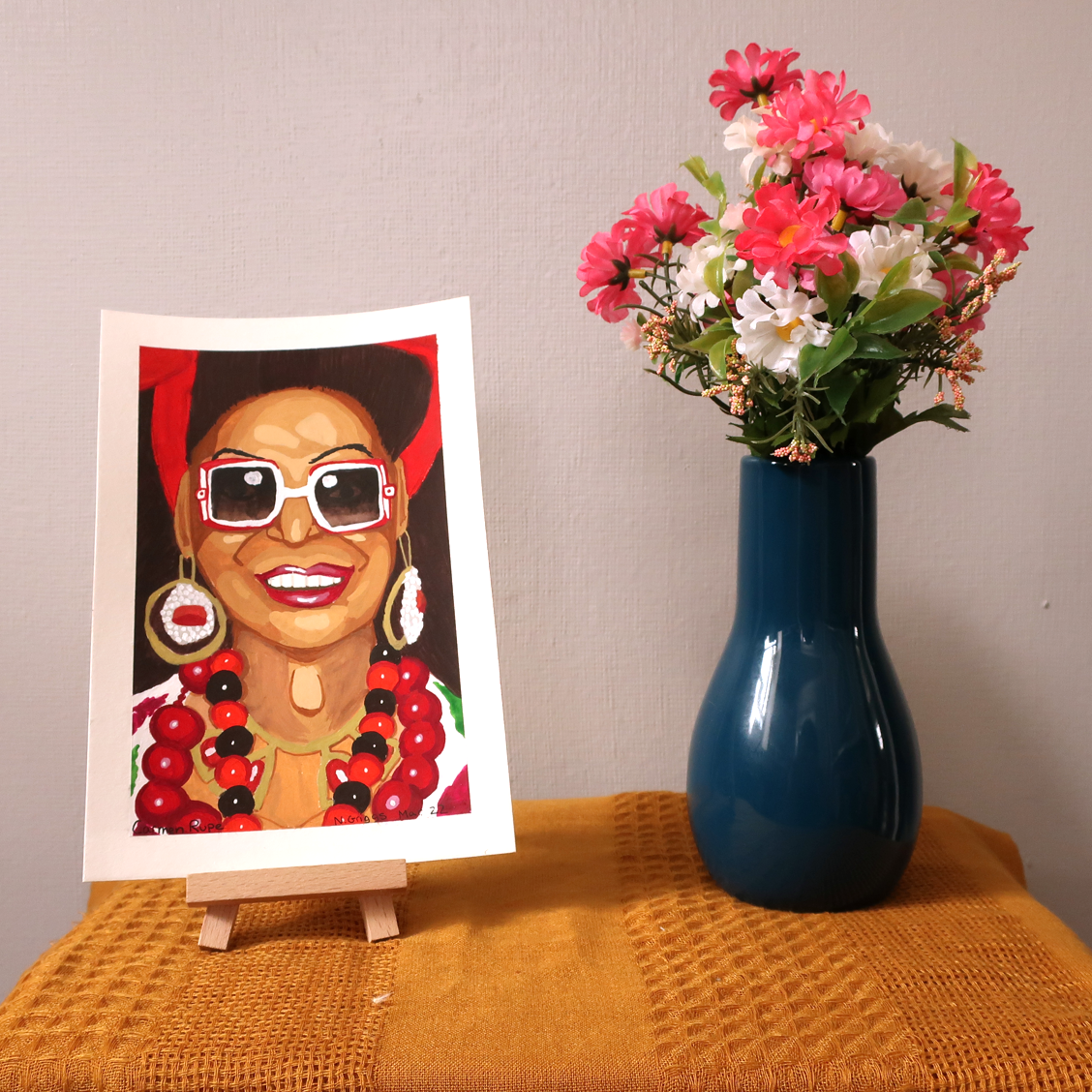
Carmen Rupe, and her story, are featured in the first collection of my Ancestor Cards.
NOTE! Some links (those with an * next to the name) are affiliate links. I will receive a small commission if you use these links to purchase something. It will not change the price of the product for you.
References
References
Bailey, K. (2025, October 7). The Oldest Profession Podcast. Old Pros. https://oldprosonline.org/carmen-rupe/
CarmenRupe MemorialTrust. (2013, December 8). CARMEN RUPE TRIBUTE. YouTube. https://www.youtube.com/watch?v=w2mQmAVnpMg
Darling, H.-H. (2020). Carmen Rupe. Making Queer History. https://www.makingqueerhistory.com/articles/2019/10/20/carmen-rupe
Schmidt, J. (2011). Gender and Diversity - Māori and Pasifika Gender Identities. In Te Ara - The Encyclopedia of New Zealand. https://teara.govt.nz/en/gender-diversity/page-4
Townsend, L. (2020). Rupe, Carmen Tione. In Dictionary of New Zealand Biography. Te Ara - the Encyclopedia of New Zealand. https://teara.govt.nz/en/biographies/6r6/rupe-carmen-tione
Transgender icon Carmen Rupe dies in NSW. (2011, December 14). The Sydney Morning Herald. https://www.smh.com.au/world/transgender-icon-carmen-rupe-dies-in-nsw-20111215-1ovgn.html