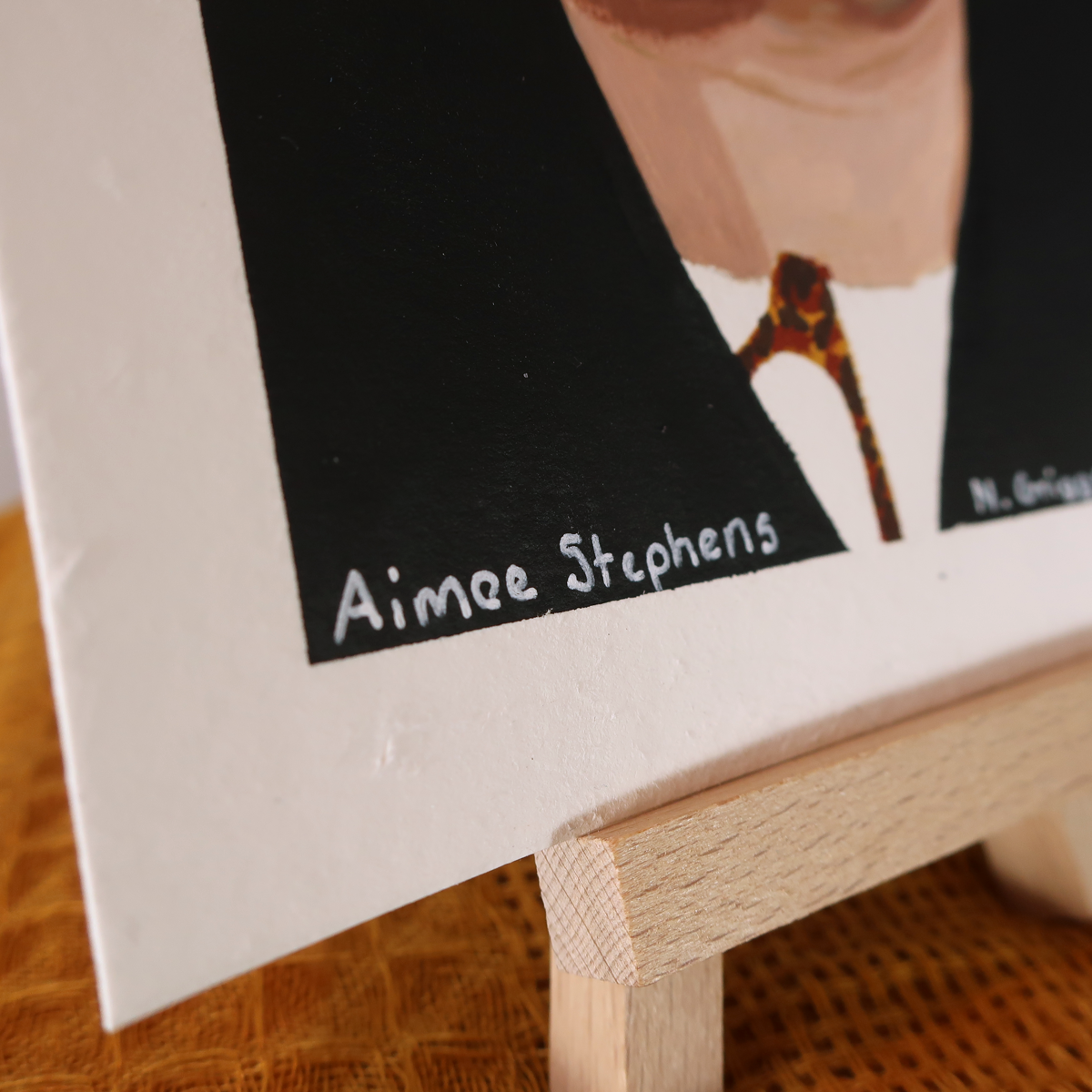
Standing up for Yourself means Standing up for Others | Aimee Stephens (1960-2020): Not Just Cistory
Content Warning: this post includes the mention of suicide.

Aimee Stephens was the very first person whose I painted as a part of my Not Just Cistory series. I was inspired, at the time, by the recent victory of the court case she had instigated, as well as saddened by her recent death. She did not live to experience the victory of her court case, but she did help protect all of the other working trans folks in the United States. I wanted to honor the woman who was brave enough to stand up for herself, and demand to be treated equally by her employer regardless of what letter was marked down on her birth certificate.
Content Warning: This blog post contains the mention of a suicide attempt.
Early Inklings and and Conservative Upbringing
There is a common narrative that all transgender folks know that they are trans from a very young age. This is is a generalization of the complex path transgender individuals take untangling their own perceptions of self from the roles that influences like society and culture have placed on them.
However, some transgender folks do have a sense of their gender identity early on, and Aimee Stephens was one of them. She shared that even at age five she knew she was a girl (ACLU). Having been born "Dec. 7, 1960" (Ortiz, 2020) the atmosphere in the mid sixties towards transgender people was even less accepting than it was now. Stephens said in a 2019 interview with Detroit News, "growing up in a conservative Baptist family in Fayetteville, North Carolina, 'it's certainly not something that was talked about'...'It was shoved in the closet, and you didn't mention it again' (Burke, Stephens 2019).
The Stonewall Rebellion was still nine years away (Library of Congress), and while trans folks did exist, and were living their lives (Other subjects of the Not Just Cistory Series that were alive during this time include: Carmen Rupe, Bobbie Lea Bennet, Dora Richter, Danielle Bunten Berry, Aleshia Brevard, Holly Woodlawn, Rita Hester, and Vanessa Show, just to name some of them!) but there was no internet, and the communities that did exist were hidden and certainly not visible to an elementary-age child.
Finding her Calling and Identity
Aimee graduated from Mars Hill University in 1984 with a degree in religious education and obtained a degree in mortuary science from Fayetteville Technical Community College in 1988 (Ortiz, 2019). She didn't plan, at first to become a funeral director or embalmer. "[F]uneral services, [was] a career she discovered while studying to become a Baptist minister. She enjoyed knowing that she was helping people remember their loved ones at peace" (Ortiz, 2019). Aimee worked for decades providing comfort and dignity to families and the deceased, even though she herself was denied the same comfort and dignity that living as herself would have granted her.
When the internet became a place regular folks could visit, transgender folks gathered and shared their experiences, creating, for the first time, a way for individuals who were isolated from others like them, to share their experiences and find community. Aimee was one of these people, connecting with transgender communities for the first time. She explained ""the Internet came about, [and] I got the chance to explore a little, and said, hey, there's other people out there that kind of feel like I do'" (Burke, Stephens 2019). Of course, knowing that you're trans, and being able to understand what this means for yourself and live authentically are two different things, and do not often happen simultaneously.
Becoming Aimee Entirely
In the meantime, "[s]he married and divorced and married again after reconnecting with a childhood friend, Donna. [In the late nineties,] she moved to Michigan to be with her... settling in Metro Detroit" (Burke, Stephens 2019). While her life continued, Aimee still struggled to come to terms with and understand what her feelings around her gender and identity meant for her.
The tension and secrecy manifested itself in Donna and Aimee's marriage until Donna confronted her wife, demanding to know if she was cheating on her with another woman (Burke, Stephens 2019). Aimee decided to be honest with her wife, recalling "'I kind of laughed when she said that because it kind of was another woman, but not the way you'd expect,'... 'I said it was me, and this is what I'm dealing with" (Burke, Stephens 2019). This first bravery on Aimee's part is one that so many of us have gone through, in one way or another.
Thankfully, Aimee's vulnerability about her struggles was met with love (as it should be). "Donna suggested Stephens see a therapist, which she did, eventually coming to the conclusion she was transgender.... [She also] supported Stephens through her transition, as did most of her extended family" (Burke, Stephens 2019). With how popular attitudes towards transgender individuals have curdled in the past ten or so years, it is gratifying to see that the hatred we are experiencing has never been the norm.
Unfortunately, despite "living as a woman in every part of her life but work, where she feared the reaction to revealing her 'true self'" Aimee still struggled. 'I hated that every day I had to go, because I was not being honest with myself or anybody else at that point,' she said (Burke, Stephens 2020). This sort of dissonance between who a person is, and who they have to present to the world can be incredibly grating, and distressing, even if it is only in a singular part of their life.
In November 2012, Stephens decided to end her life. She felt trapped, saying "she couldn't go on living as 'two separate people'... In my mind, I was thinking: If I can't go forward and I can't go backwards, where does that leave me? I only had one conclusion in my mind, which was to end my life and let it be over'...". Ultimately she did not go through with her attempt, realizing that "'I liked me too much... And the only thing for me to do was to choose life and move forward, regardless'" (Burke, Stephens 2019). thankfully, Stephens was able to continue to take steps forward.
That same year "Aimee made the decision to tell her coworkers that she is a woman (ACLU)". This was the final step she needed to take in order to live as a woman, as herself, in every part of her life. Her letter read: "What I must tell you is very difficult for me and is taking all the courage I can muster... I have felt imprisoned in a body that does not match my mind, and this has caused me great despair and loneliness... I will return to work as my true self, Aimee Australia Stephens, in appropriate business attire. I hope we can continue my work at R.G. and G.R. Harris Funeral Homes doing what I always have, which is my best! (Ortiz, 2020)”. This act of bravery and vulnerability was another one that so many transgender individuals must take in order to be authentically themselves that is not typically required of cisgender folks.
A First Brave Step
Two weeks after she told her boss, in 2013, she was fired (ACLU). Some of the articles go into the reasoning of her boss, the funeral home's owner, Thomas Rost, but I do not feel that going into detailed description his motives to be relevant. I am writing about Aimee, and while Thomas did greatly affect her life in this aspect, I think it will suffice to share his statement in court, under oath, about why he fired Aimee; "Well, because he was no longer going to represent himself as a man. He wanted to dress as a woman” (Ortiz, 2020). He also referenced his religion, saying that he "believes the Bible teaches that a person's sex is 'an immutable God-given gift,' that it is wrong for a person to 'deny' his or her God-given sex" (Burke, Stephens 2019).
Remember, Aimee had received education to become a Pastor, and she did not agree with his interpretation. She said "'Having studied the Bible, I know that's not in the Bible'..." (Burke, Stephens 2019). She also pointed out that "'If he’s read and studied, and this is the conclusion he’s come to, that’s certainly his right. But that’s where his right ends. His belief doesn’t give him the option of discriminating against somebody else and the way they believe'"(Burke, Stephens 2019). Clearly he did not see Stephens as a woman, or respect her own knowledge of herself as a person.
Not willing to be simply tossed aside and denied the respect granted to others, Aimee Stephens embarked on another journey of bravery. She "filed a complaint with the federal Equal Employment Opportunity Commission, which sued the funeral homes, saying her employer had violated the Civil Rights Act of 1964. But a district court ruled in the employer’s favor. Ms. Stephens then won in the U.S. Court of Appeals for the Sixth Circuit, in Cincinnati" (Ortiz, 2020). This began the case's rise through the courts. The "decision [of the Sixth Circuit] was challenged by the funeral home, represented by the Alliance Defending Freedom, a conservative nonprofit group, and in April 2019 the Supreme Court agreed to hear the case on the question of whether the Civil Rights Act protects transgender people from workplace discrimination" (Ortiz, 2020).
The end to Aimee's employment at R.G. and G.R. Harris Funeral Homes caused Aimee and her family strife, even beyond the emotional distress of being dismissed from a job and career that she loved, simply for being open and honest about herself. She now faced a struggle that many transgender individuals experience; the inability to find employment. We can't know if her transgender identity played a role in this struggle, but whatever the reason "she struggled to find work in the funeral home industry after her firing, despite her decades of experience. She had interviews, second and third interviews, then her calls wouldn't be returned" (Burke, Stephens 2019)
As time passed, the family's financial struggles continued, and "[s]he and Donna had to sell some of their possessions to get by financially. 'We're survivors,' she said... Despite the financial hardship, Stephens has not regretted challenging Rost's decision" (Burke, Stephens 2019). Stephens knew how important it was, not only for her, but for trans folks across the country, that she stand up to bigots who thought they could fire individuals for how they presented themselves.
Thankfully, she "eventually got a position as an autopsy technician at the Detroit Medical Center's Sinai-Grace Hospital dissecting bodies for pathologists..." and was able to work "through the end of 2014 when her kidneys failed. Between doctor's appointments and dialysis treatments, she couldn't work full-time and was forced to retire" (Burke, Stephens 2019). Throughout all of this, Stephens' case continued its way through the courts.
Victory and Bravery
When the Supreme court agreed to hear Stephens' case Aimee became the first openly transgender person whose civil rights case was heard by the court. (Romo, 2020) Her act of bravery allowed for her to pave the way for others whose choice of self-expression through dress does not align with the typical expectations for the sex printed on their documents. When Aimee "traveled to Washington for the Supreme Court hearing on the case... She said at the time that she was overwhelmed by the number of people demonstrating on her behalf... 'To hear them outside of the courthouse steps chanting my name, telling me that they loved me, that has a big effect on you... The more I’ve seen the support, it gives me the strength to get up another day, to go on fighting another day and give that same hope to all the rest'" (Ortiz, 2020). Aimee's bravery had become a beacon that transgender folks could and did rally around.
In the end, the supreme court judged "that LGBTQ people are protected under Title VII of the Civil Rights Act of 1964, which states employers cannot fire, refuse to hire or otherwise penalize people because of their sex" (Romo). More technically, The ruling was "Affirmed, 6-3, in an opinion by Justice Gorsuch on June 15, 2020. Justice Alito filed a dissenting opinion, in which Justice Thomas joined. Justice Kavanaugh filed a dissenting opinion (Barnes)". Aimee's fight for respect and the right to dress professionally in a way that affirmed her identity, now extended to every transgender person in the United States.
Aimee passed away as a result of her kidney disease on May 12th, 2020, just a month before the ruling on her court case (Romo, 2020). While she was unable to see her victory on this side of life, she undeniably impacted multitudes of transgender individuals.
Fundamentally, Aimee Stephens wanted what all people, both trans and cis gender, want. "If you're part of the human race, which we all are, we all deserve the same basic rights. We're not asking for anything special. We're just asking to be treated like other people are "' (Romo, 2020).
Aimee Stephens, and her story, are featured in the first collection of my Ancestor Cards.
NOTE! Some links (those with an * next to the name) are affiliate links. I will receive a small commission if you use these links to purchase something. It will not change the price of the product for you.
References
ACLU. (n.d.). R.G. & G.R. Harris Funeral Homes v EEOC & Aimee Stephens. American Civil Liberties Union. Retrieved March 11, 2026, from https://www.aclu.org/cases/rg-gr-harris-funeral-homes-v-eeoc-aimee-stephens
Barnes, A. (2018, August 6). R.G. & G.R. Harris Funeral Homes Inc. v. Equal Employment Opportunity Commission. SCOTUSblog. https://www.scotusblog.com/cases/case-files/r-g-g-r-harris-funeral-homes-inc-v-equal-opportunity-employment-commission/
Burke, M. N. (2019, September 16). “I chose to stand up”: Mich. transgender woman takes firing fight to High Court. The Detroit News. https://www.detroitnews.com/story/news/politics/2019/09/16/michigan-transgender-rights-case-supreme-court/2231329001/?gnt-cfr=1&gca-cat=p&gca-uir=false&gca-epti=z119924u116124v119924&gca-ft=285&gca-ds=sophi
Library of Congress. (2019). Research Guides: LGBTQ+ Studies: A Resource Guide: Stonewall Era and Uprising. Guides.loc.gov; Library of Congress. https://guides.loc.gov/lgbtq-studies/stonewall-era
Ortiz, A. (2020, June 16). Aimee Stephens, Plaintiff in Transgender Case, Dies at 59. The New York Times. https://www.nytimes.com/2020/05/12/us/aimee-stephens-supreme-court-dead.html
Romo, V. (2020, May 12). Aimee Stephens, Transgender Woman At Center Of Major Civil Rights Case, Dies At 59. NPR.org; National Public Radio. https://www.npr.org/2020/05/12/854946825/aimee-stephens-transgender-woman-at-center-of-major-civil-rights-case-dies-at-59
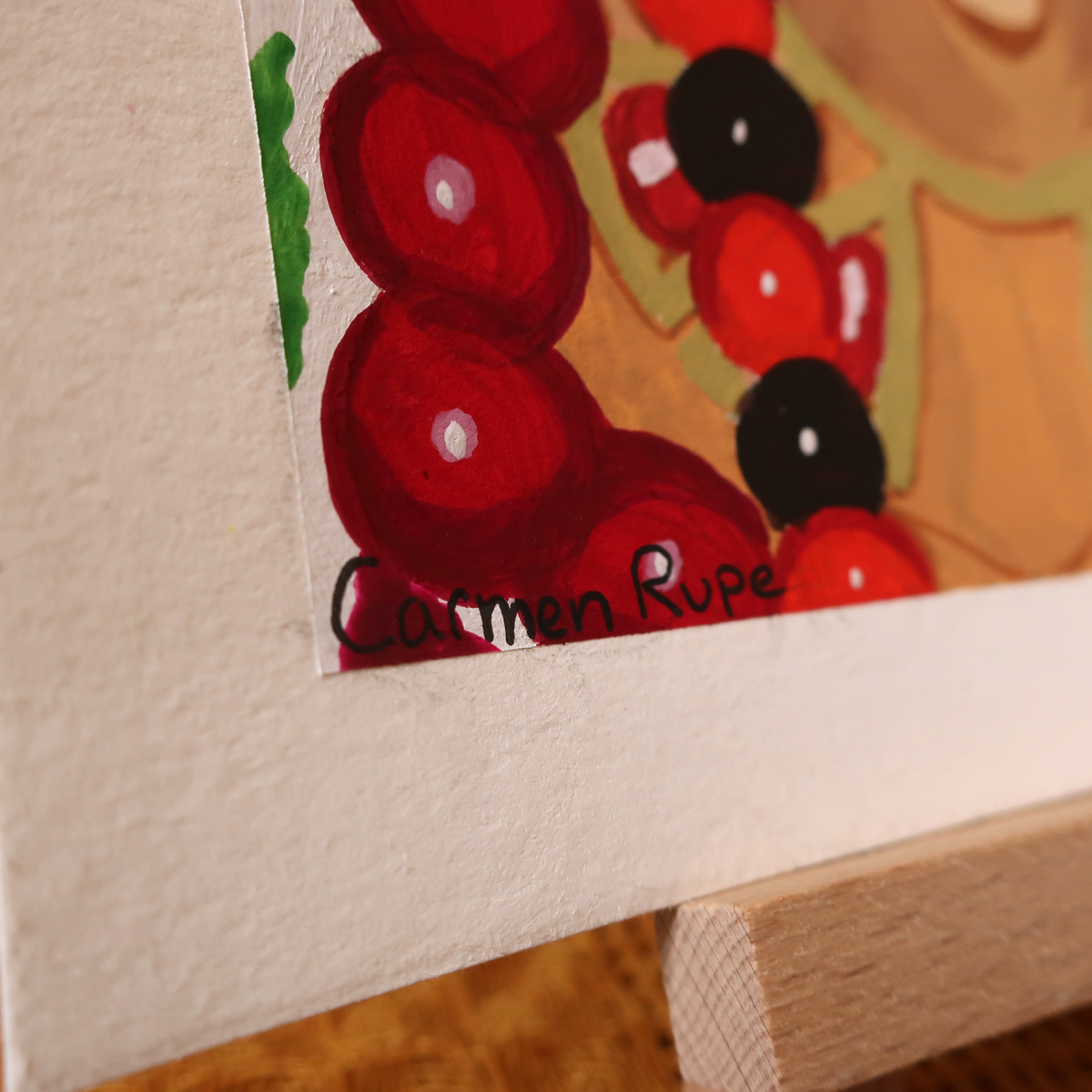
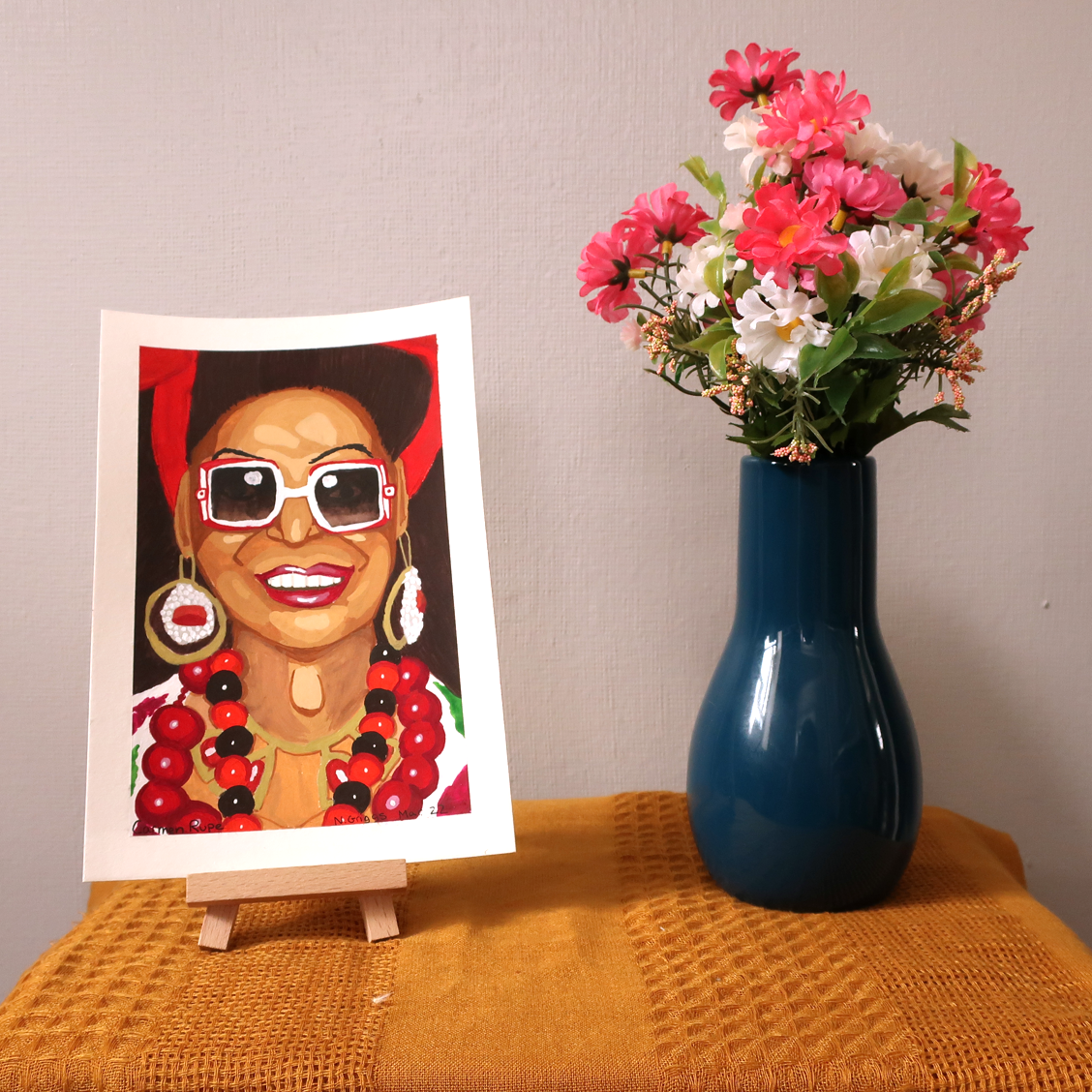
Community Care is Queer | Carmen Rupe (1936-2011): Not Just Cistory
Content Warning: this post includes detailed descriptions of police violence against a trans woman of color, and the mention of the suicide of a parent.
Raised on Family and Tradition
Content Warning: this next part mentions the suicide of a parent.
Carmen Rupe, one of the most famous drag queens, political activists, and Mother to many of the queer and trans folks of Aotearoa (also known as New Zealand), was born on "10 October 1936 at Waimiha, between Taumarunui and Te Kūiti, the child of Elsie Tekahukete Wilson (Ngāti Hauā, Ngāti Heke-a-Wai) and her husband, John Edward Rupe (Ngāti Maniapoto)" (Townsend, 2020). She was an incredible trailblazer, was known as a beloved member of the queer and trans community in Wellington during her lifetime.
Rupe's childhood was largely characterized by family and farm life. She lived amongst her extended family, which included her "koro (grandfather) [who] was a respected tohunga (priest), [and] their kuia (grandmother)... was an expert weaver of korowai (cloaks)..." as well as her "three brothers and three sisters" (Townsend, 2020). Farm life in Waimiha was guided by the Māori maramataka (calendar) and there was no electricity, refrigeration or indoor toilet (Townsend, 2020). Carmen Rupe was surrounded by loved ones and Māori culture from the very beginning of her life.
In 1941, when Carmen was five, her father committed suicide (Townsend, 2020). In no family, is a tragedy like this painless, but it must have been incredibly hard for young Rupe and her family, given how close they all were, and how family was valued. Elise did eventually remarry, to "Inuhaere Rupe (Te Rupe), John’s brother. The couple had a further six children before Te Rupe’s death in 1947". This meant that Carmen had 12 siblings. Despite the large size of her family, Carmen and her mother were able to maintain a close relationship, and she seems to have accepted Carmen's gender (expression) and, later, sexuality (Darling, 2020).
Rupe, was aware "from a young age that she did not fit into the gender that was assigned to her at birth by the colonizing society of her country, and like many young transgender people, she expressed herself through play, dressing up in her grandmother’s clothes often. When she was fifteen, she even performed Hula at a local celebration wearing a dress" (Darling, 2020).
Familial support has not been uncommon for the subjects of the Not Just Cistory series so far, and, in Rupe's case, Māori culture and tradition support multiple genders beyond cisgender men and women. "Those who were born with the wairua (spirit) of a gender different to the one they were assigned at birth may call themselves ‘irawhiti’ (with a gender that changes or is associated with change), ‘whakawāhine’ (creating or becoming a woman), ‘tangata ira tāne’(a person with the spirit or gender of a man), or one of a number of other terms" (Schmidt, 2011). These beliefs have endured through to the present day, despite the attempts at assimilation by European colonizers.
Army Life and the Beginning of Being Carmen
At the young age of fifteen, Carmen left home, and struck out on her own. She worked in a sawmill, then the Taumarunui Post Office, and later worked in the Mosgiel Woollen Mills (Townsend, 2020). During this time she has her first romantic relationship with a man, and it confirmed what she had always known, that she was attracted to men (Townsend).
In the 1953, at seventeen, Rupe moved to Auckland where she was soon was "enlisted into compulsory military service, and it was there that she began to participate in drag performances, something that the other soldiers were not only entertained by but often encouraged" (Darling, 2020). She was able to express herself in a way that was socially acceptable, by participating in these 'morale boosting' events.
After she was discharged she "started work as an orderly at Cornwall Hospital in Auckland" (Townsend, 2020). Up until this point, Carmen had gone by her birth name and dressed traditionally masculine, and had generally lived as a man. However, during this time she began to present more femininely, and would go out in public dressed as a woman. She also began her career as a sex worker during this time, sometimes travelling between Australia and New Zealand with her clients (Townsend, 2020).
Rupe also chose the name Carmen for herself around this time. When she was asked for her name by a client she replied 'Carmen', inspired by the main character of the 1945 movie 'The Loves of Carmen' (Townsend, 2020). She was finding a way to live her life as herself, both in the metaphorical sense, but also in the practical sense.
Life in Sydney (the first time)
Content Warning: this next part includes detailed descriptions of police violence against a trans woman of color.
In 1959 Carmen Rupe moved to Australia after her mother's death (Darling, 2020). From her very first night in Sydney, she would go to places like Hyde Park, Blue Meringue Street, Kings Cross, or The Wall where she could pick up or be picked up by other men, this being before she began to live and work openly as a woman (CarmenRupe MemorialTrust, 2013). This was, of course, not without risk, but finding such a vibrant queer community immediately upon arrival to a new country, must have felt like a lifeline and a miracle to Rupe.
When she started working as a female transgender prostitute and drag queen (to use the terms she used for herself in interviews) the danger was increased. While the police disliked the male sex workers (and Sex work in general was illegal in Australia in general, at the time (Bailey, 2025)) they were incredibly brutal on transgender sex workers and drag queens in particular.
In an interview shared by the Carmen Rupe Memorial Trust on YouTube Carmen describes in an straightforward manner what police did when you were caught working as a female sex worker, were you transgender. The police would:
beat us up there outside outside in the street. They took us down to Darlinghurst police station and give us another hiding and beat us up and then they also ripped our wigs... off our heads and they also ripped all our prostitute female attire... and if we had women's underpants were in more trouble. You had to have men's underwear if if you're going to do a proper show... [T]hey put um telephone books down our chest so they can punch us. [T]hey used to also hose us in the in the Darlinghurst police station, give us a good beating up, good hiding, then they threw us in the straight cells for court the next morning... [A] lot of the guys who got picked up...were thrown in straight cells beaten up badly by the straight guys because they hated gay men drag queens and male prostitutes and drag prostitutes... [Y]ou don't mind getting picked up overnight but the worst part if you got picked up on a Friday night you didn't go to court until Monday, if you're in drag... you had this long black beard and so anyhow everyone used to laugh and... it didn't look very nice with a uh five o'clock shadow going at ten o'clock into court and then trying to get home partly dressed in drag... (CarmenRupe MemorialTrust, 2013).
It seems that no matter where you look throughout modern history, police are beating and humiliating transgender folks, particularly those who are women, sex workers, people of color, or some combination of the three.
Despite the danger she worked as the first Māori drag queen, performing in venues such as Les Girls in Kings Cross, and The Purple Onion, the first openly gay bar in the area (Transgender Icon Carmen Rupe Dies in NSW, 2011). This was the start of her lifelong role as an admired drag queen and community leader.
Rupe was arrested multiple times throughout her life, once being sent to Long Bay Prison, which was an incredibly dangerous place for anyone who wasn't a straight cisgender man. She explained that she was there for two weeks while the authorities checked her documents, since she was a New Zealander, rather than an Australian (CarmenRupe MemorialTrust, 2013).
The police would also raid the houses of known transgender and gay sex workers, looking for anything 'abnormal', so, once she was in a better financial situation, Carmen rented out a 'decoy' flat that she could tell the police was her residence, and avoid their invasive searching (CarmenRupe MemorialTrust, 2013).
In the same interview where she describes the despicable treatment by authorities, she explained that anyone who was visibly trans or queer would not be able to get any 'straight' work because the attitudes of the over culture mirrored that of the police, which is why she, and so many others turned to sex work, to have enough money to live (CarmenRupe MemorialTrust, 2013). It's not that trans or queer people are more likely to want to be a sex worker or are more likely to enjoy sex work (though some do, and that is fine), but more often it's that they cannot find any other 'straight' work, as Carmen put it.
Return, Rest, and Recuperation
Eventually, Carmen did move back to New Zealand. It wasn't necessarily by choice, however. She went back to Wellington to avoid the escalating police brutality, explaining that "the police was giving us a hiding every week and I was just getting sick and sore and wounded" (CarmenRupe MemorialTrust, 2013). Thankfully, "New Zealand wasn't so bad, because we were New Zealanders and we were safe at home" (CarmenRupe MemorialTrust, 2013). This was a time of rest and recovery for Carmen, after such a long stretch of being persecuted by the police, as well as a time of growth and community building.
After a six-month stretch in prison spanning 1962 and 1963 (she was charged with 'permitting a premises to be used as a brothel' she returned to Auckland and used the money she received in an inheritance to open a boarding house and live, finally, full-time as a woman (Townsend, 2020). Despite the legal strides being made around the world, the fact that money makes living our truth often easier in many ways, is still the case.
Despite her new business venture, she continued to put the skills she had honed in Sydney to use, performing as "an exotic dancer at Strip-A-Rama... and at private parties... At the end of the performance she removed her wig to reveal ‘Trevor’ beneath the costume – a dramatic act intended to shock" (Townsend, 2020).
In 1966 Carmen's life as herself was given another legal support; after being arrested for dressing as a woman "Justice McCarthy ruled that it was not illegal for men to dress in women’s clothing and dismissed the case. It was a win for all trans women, and Carmen never wore male clothing again" (Townsend, 2020). This was, in some ways the beginning of Carmen's legal advocacy for the LGBT+ people of Aotearoa.
Carmen the Entrepreneur
Now that Carmen could legally (and with a bit more safety) live openly as a woman, she continued her transition. "She legally changed her name to Carmen Tione Rupe on 2 September 1968.... [She continued taking the] female hormones [she began] in the 1950s, and in the 1970s she had breast augmentation surgery along with electrolysis" (Townsend, 2020). The tides were beginning to shift for Carmen, and for other Transgender people in Aotearoa.
In 1967 she began the venture that would ultimately gain her international recognition: Carmen's International Coffee House. Beyond being just a cafe, it was a safer space for trans and queer folks to meet and connect, which included, of course, sexual encounters. The interior of 86 Vivian St. "was an eccentric mix of Asian, Egyptian, Arabian and African décor. Plush red velvet curtains, oriental rugs and reproductions of classical European paintings adorned the walls, while antiques were juxtaposed with a tropical fish tank, piano and jukebox, displays of peacock features and wild grasses" (Townsend, 2020).
As a part of keeping her clientele cafe, Rupe devised a code cafe customers could use to indicate "their preferences by how they arranged their teacups and saucers. A cup placed upside down on a saucer requested sex with a woman; a cup on the side a transgender liaison; a saucer on top of a cup a homosexual encounter" (Townsend, 2020). Beyond the coded language of cup and saucer placement, the physical space itself was designed to protect; "the entrance had a confusing and intricate set of stairs" (Darling, 2019) and there was a buzzer that could be pressed if and when the police arrived, to alert the sex workers and their clients (Townsend, 2020). Rupe knew just how violent the police could be, and took precautions when creating this haven for the queer and trans folks of Wellington.
Not only did Carmen Rupe provide safety for her patrons, she created employment for others in the community. "The staff were a mix of drag queens, female impersonators, transvestites and transsexuals, plus a few gay men, straight men and lesbian women. Some of the hosts were sex workers but many were not. Above all, staff were expected to be welcoming to everyone" (Townsend, 2020). While sex was on the proverbial menu, it was not a requirement for employees to work there.
Buoyed by the success of Carmen's International Coffee House, Rupe opened several other locations around the city, including an antique shop (Townsend, 2020). Her years of experience within the hospitality and entertainment industry were an asset that allowed her to support herself and her community when few with an economic power would.
Mayor Carmen?
But Carmen was not simply satisfied with her cafes, entertainment establishments, and the community building she had done so far. In 1977 she ran for Mayor of Wellington. "She campaigned for hotel bars to be open till midnight or even 2am, the drinking age to be lowered to 18, prostitution to be made legal, homosexual acts to be decriminalised, abortion to be decriminalised and nudity on some beaches" (Transgender Icon Carmen Rupe Dies in NSW, 2011). She was unsuccessful securing the position of mayor, but the fact that all of the issues on her platform listed above are now legal (Transgender Icon Carmen Rupe Dies in NSW, 2011), does suggest that she was successful in other ways.
Both before and after her bid at mayor, Carmen worked tirelessly with charities. She used her fame from publicity stunts such as declaring that she new of a member of Parliament who was gay, as well as appearing topless at different events, to promote causes that would support her community and Aotearoa as a whole (Townsend, 2020). Despite her identity and work toeing the line of illegality, and public taboo, she was appropriately beloved; when ["s]he announced her availability to do public talks for charity, and the response was so overwhelming she immediately took 25 bookings" (Townsend, 2020).
Returning to Australia
While Carmen was recuperating in Wellington, Australia had begun to change. She described the turning of the tide in Sydney, saying "All the gay people had a huge big thing in in king's cross to leave the drag queens alone; a Stone Wall thing or Mardi Gras thing... [T]hey won and [the police] were not allowed to touch them, the gays, and beat them up and pick them up and give them a hiding for nothing. I'm told that's where it all started, 78, 79..." (CarmenRupe MemorialTrust, 2013).
In Australia, Carmen continued to the most good that she was able. She "[managed] a small community centre and [continued] helping homeless and vulnerable people. She was an advocate for safe sex and HIV/AIDS education as well as LGBTIQ+ rights. As a respected and enthusiastic member of the Sydney-based Te Rau Aroha kapa haka group, she raised money for the casualties of Kings Cross (Townsend, 2020)." It is no wonder that Carmen Rupe was and is still known as a pillar of the Trans and Queer communities she lived in.
Carmen Rupe lived in Sydney for the rest of her life. She did regularly return home to Wellington, and was still an active member of the Queer and Trans community there (Townsend, 2020).
She died in 2011 of Kidney Failure. "Following hip surgery... [that year] Carmen was admitted to hospital several times" (Transgender Icon Carmen Rupe Dies in NSW, 2011) before passing away at the age of 75 (Darling, 2019). Her funeral and the public mourning of her death were widespread in both Australia and New Zealand, with "Wellington Mayor Celia Wade-Brown [describing] Carmen [as] a cheerful and colourful personality. 'I admired her strength in living her life on her terms and standing up against discrimination.'" (Transgender Icon Carmen Rupe Dies in NSW, 2011).
A Legacy of Love
It is almost impossible for me to sum up Carmen Rupe's legacy. She worked for so long in so many different ways to make the world a better place, while always remaining authentic to herself. I think, perhaps, the best way to explain it, without restating this entire blog post (you could always read it again, if you wanted), is that while she may not be able to continue her work on this plane any more, she created a powerful example of what it means to be a force for change. She worked both within and without the law, creating community resources using her skills and strengths, when there were few others.
If we want to follow in Carmen's footsteps and transgender individuals, and as community members (wherever we live) we need to seek out our bravery and begin to make change where we can. We shouldn't be afraid of a little notoriety and scandal, and use it to our advantage. And finally, we need to be our truest, most vibrant selves while we work.
Carmen Rupe, and her story, are featured in the first collection of my Ancestor Cards.
NOTE! Some links (those with an * next to the name) are affiliate links. I will receive a small commission if you use these links to purchase something. It will not change the price of the product for you.
References
References
Bailey, K. (2025, October 7). The Oldest Profession Podcast. Old Pros. https://oldprosonline.org/carmen-rupe/
CarmenRupe MemorialTrust. (2013, December 8). CARMEN RUPE TRIBUTE. YouTube. https://www.youtube.com/watch?v=w2mQmAVnpMg
Darling, H.-H. (2020). Carmen Rupe. Making Queer History. https://www.makingqueerhistory.com/articles/2019/10/20/carmen-rupe
Schmidt, J. (2011). Gender and Diversity - Māori and Pasifika Gender Identities. In Te Ara - The Encyclopedia of New Zealand. https://teara.govt.nz/en/gender-diversity/page-4
Townsend, L. (2020). Rupe, Carmen Tione. In Dictionary of New Zealand Biography. Te Ara - the Encyclopedia of New Zealand. https://teara.govt.nz/en/biographies/6r6/rupe-carmen-tione
Transgender icon Carmen Rupe dies in NSW. (2011, December 14). The Sydney Morning Herald. https://www.smh.com.au/world/transgender-icon-carmen-rupe-dies-in-nsw-20111215-1ovgn.html